
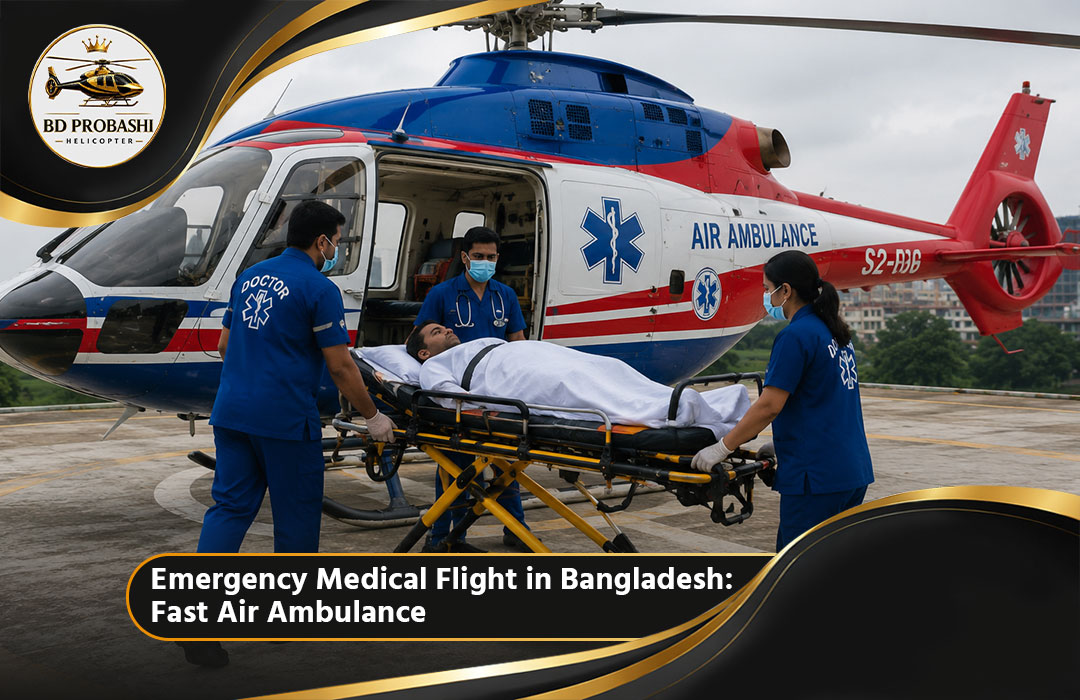
Emergency Medical Flight in Bangladesh: Fast Air Ambulance
In a medical emergency, every minute counts. Road ambulances in Bangladesh often face heavy traffic, poor road conditions in remote areas, and long travel distances between districts and major hospitals. An emergency medical flight in Bangladesh offers a faster, more reliable alternative, transporting critically ill or injured patients to advanced medical facilities in a fraction of the time it would take by road.
What Is an Air Ambulance and How Does It Work?
An air ambulance is a helicopter equipped and staffed to transport patients who need urgent medical attention. These flights are typically arranged when a patient's condition is too critical for road transport, when the destination hospital is far away, or when the patient is located in a remote district with limited road access. The helicopter can be fitted with basic medical equipment and, depending on the provider, accompanied by trained medical personnel to monitor the patient throughout the flight.
Common Situations That Require an Emergency Medical Flight
- Severe accidents or trauma cases requiring immediate specialist care
- Critical cardiac or stroke patients who need to reach a hospital within a narrow time window
- Patients in remote or hard-to-reach districts far from major hospitals
- Inter-hospital transfers for patients who need specialized treatment unavailable locally
- Time-sensitive maternal or newborn emergencies
How to Arrange an Emergency Medical Flight in Bangladesh
When every second matters, having a clear process in place helps families and hospitals act quickly. The typical steps include:
- Call the air ambulance provider immediately and describe the patient's condition and location.
- Share the pickup point and the receiving hospital, along with any medical reports available.
- Coordinate with the sending and receiving hospitals so the patient is ready for transfer and the destination is prepared to receive them.
- Confirm the helicopter's estimated arrival time and prepare a safe, clear landing area if the pickup is outside a hospital helipad.
- Complete payment and documentation, which many providers can process quickly given the urgency of the situation.
Why Speed and Reliability Matter
In emergencies such as strokes, heart attacks, and major trauma, the so-called golden hour — the critical window in which treatment is most effective — can determine the difference between full recovery and long-term complications. Ground transport across long distances or through congested city traffic can consume this window entirely. An emergency medical flight in Bangladesh dramatically reduces transit time, giving patients a much better chance of receiving timely, life-saving treatment.
Choosing a Dependable Air Ambulance Provider
Not all providers offer the same level of service, so it's important to check a few key factors before you need one in an emergency. Look for a provider with 24/7 availability, experienced pilots familiar with regional geography and weather patterns, a well-maintained fleet, and clear communication with hospitals for smooth handovers. Some providers also offer coordination support to help arrange hospital admission on the receiving end, which can save valuable time during a stressful situation.
Plan Ahead When Possible
While emergencies are unpredictable, families with elderly relatives, chronic health conditions, or those living in remote areas can benefit from knowing in advance which air ambulance providers operate in their region and how to reach them quickly. Saving a provider's emergency contact number and understanding the basic booking process ahead of time can save critical minutes when a real emergency occurs.
Final Thoughts
An emergency medical flight in Bangladesh can be the difference between life and death in critical situations. By understanding how air ambulance services work and knowing how to act quickly, patients and families can access faster, safer transport to the medical care they urgently need.